The sharper takeaway was that OpenCV still matters because it solves a very broad class of practical problems that giant vision-language models do not. People kept coming back to the boring but essential use cases. Load an image or video, inspect pixels, stitch panoramas, drive a focus system, do contour detection, run a detector locally on a
Raspberry Pi, or process camera feeds on
embedded hardware with tight latency and privacy constraints. In those settings, OpenCV and small task-specific models like
YOLO remain the workhorses. The claim that newer
multimodal models make that stack obsolete got swatted down hard. The cost, latency, memory footprint, and offline requirements are just too different.
Where readers wanted OpenCV to go next was narrower and more pragmatic than the announcement implied. Several argued that OpenCV should stop acting like it can win the inference-runtime race and instead become a better wrapper around engines such as
ONNX Runtime,
TensorRT,
ExecuTorch,
LiteRT, and
Core AI, with strong tooling around model loading, benchmarking, and deployment. Mobile and camera I/O came up repeatedly as underloved areas. So did UI. The sense was that OpenCV’s value is in being the glue between vision pipelines, not in replacing every specialist component.
That practical respect for OpenCV was paired with a lot of scar tissue. People praised it for accessibility and breadth, then immediately complained about version churn, build complexity, inconsistent docs, weak video output, and performance that sometimes loses badly to custom code. Replies pushed back on some of that, saying many legal and patent complaints confuse core OpenCV with
opencv_contrib and that the core library has actually stabilized. Even so, the consensus was not that OpenCV 5 suddenly fixes the old pain. It is that OpenCV remains indispensable, but experienced teams still pin versions, benchmark everything, and expect to own some integration pain.
A lot of attention also went to the release post itself, which many readers thought was obviously AI-written, right down to the diagrams. That did not change views on the code, but it did color trust in the announcement. The irritation was less about ethics than quality control. If the project could not be bothered to write and review its own release notes carefully, people were less willing to take sweeping claims like "the biggest leap in years" at face value.
opencv.org
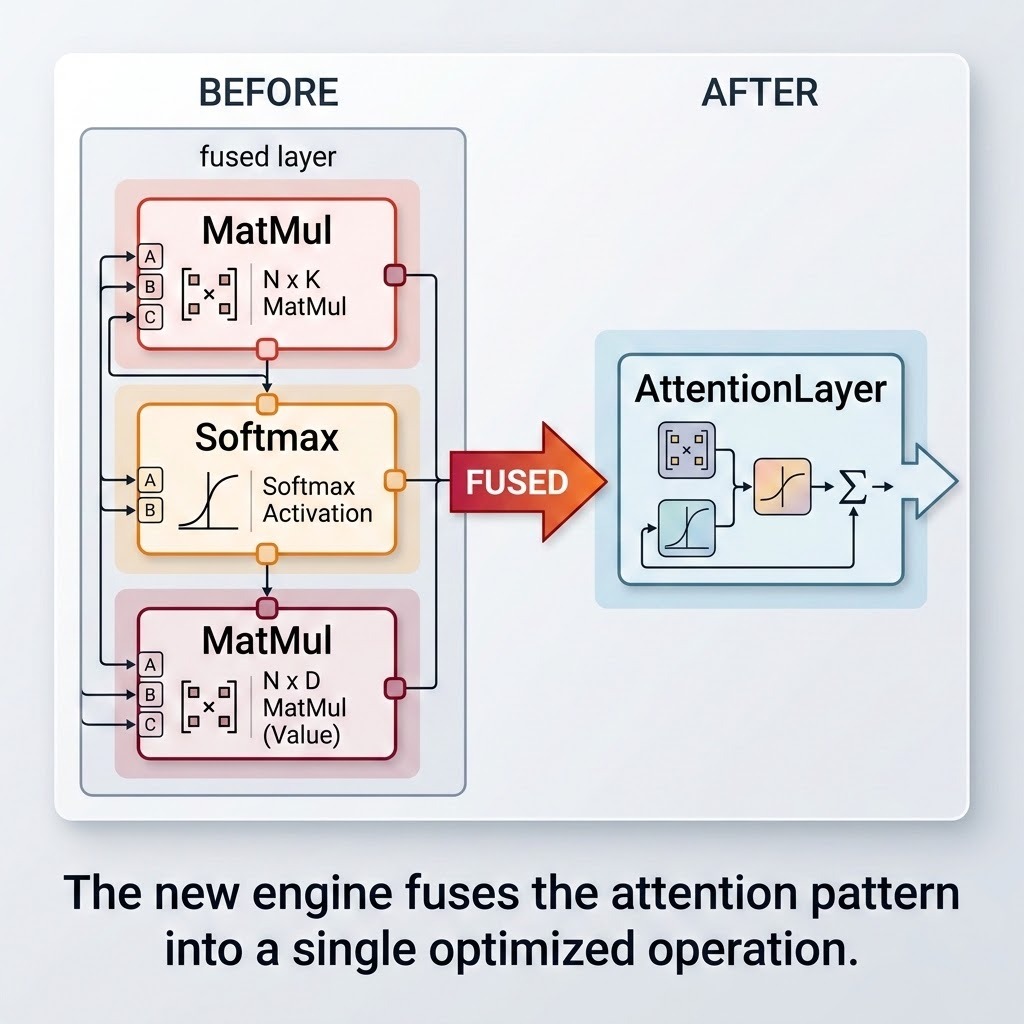 Example OpenCV diagram image