Drafted launched an AI tool for residential design that lets users specify things like square footage, lot shape, room placement, and adjacency constraints, then generates floor plans, exterior elevations, 3D views, and export files. The founder framed the current product as schematic ideation, not stamped construction documents, and said the roadmap is to add more buildability context over time, including zoning, structural constraints, MEP, pricing, multi-story support, and tighter interoperability with existing software.
That framing ended up being the key to how people evaluated it. The strongest positive read was that custom-home layout work is a real pain point even before engineering starts. Several people said fast iteration could save hours of back-and-forth with drafters and help homeowners show an architect, engineer, or contractor what they actually want. The strongest negative read was that many showcased outputs still contain obvious nonsense, including broken circulation, impossible garage access, mismatched renders, and code-unfriendly door swings. That made people skeptical of any claim beyond inspiration and early concept generation.
Where the conversation landed is pretty practical. In easy permitting markets and standard single-family builds, plenty of work already runs through template plans, light drafting edits, a structural stamp, and permit submission. In that slice, a tool like this could compress the expensive fuzzy front end. In stricter markets, or for ADUs, garage conversions, tight urban lots, and anything with heavy local rules, the missing layers are the product. The company seems to know that. The founder repeatedly positioned the current version as a design-starting tool and not a substitute for architects or engineers.
Treat this as a front-end design exploration tool, not an architecture replacement. If you work in a regulated workflow, the opportunity is in owning the schematic phase and handing off cleanly into engineering, BIM, and permit processes.
Cautiously interested, with a lot of skepticism. People liked the speed and the idea of reducing early design iteration, but confidence dropped fast once they inspected sample plans and saw obvious layout and buildability errors.
Key insights
01
The hard part starts after layout
The useful reading here is that floor plans are only the first layer of a residential project. Real value appears when the software can reason about code restrictions, structural loads, MEP conflicts, cost, and product-level outputs such as bills of materials. The founder confirmed that the current product stops at schematic ideation and plans to add those layers later, which makes the present product easier to place in the stack.
If you are evaluating tools in construction tech, ask exactly where they stop in the workflow. A strong schematic generator is valuable, but it does not replace downstream engineering or estimating unless it can produce reliable constraint-aware artifacts.
The near-term market is not "architecture" in the abstract. It is standard builds in jurisdictions where code-compliant plans and a structural stamp are usually enough to move forward. That is why some people saw clear value for single-family homes and simpler ADUs, while others in stricter cities saw almost none. Local permitting complexity is not edge-case friction here. It decides whether this is a serious workflow tool or just ideation software.
Segment customers by jurisdiction before you segment by persona. Products like this will feel transformative in low-friction permit markets and disappointing in high-friction ones unless local code and zoning are first-class inputs.
A lot of skepticism came from surfaced examples, not from the concept itself. People found mismatches between floor plans and renders, impossible room relationships, and artifacts like staircases in supposedly single-story homes. The founder said some of this came from a furnishing-generation bug and from aesthetic renders that rewrite the underlying plan. That explanation helps, but it also shows how fragile trust is when the visuals look polished and the underlying geometry is wrong.
In design software, polished renderings can hurt you if they overpromise fidelity. Make the boundary between concept art and source geometry painfully clear, or users will judge the product by the most visible failure mode.
The credible wedge is not replacing architects. It is helping homeowners and builders converge on a usable starting point before they pay professionals to refine it. People who liked the product described it as a way to explore possibility space quickly and arrive with stronger convictions, which can cut revision cycles and make later expert work more efficient.
Positioning matters here. Sell speed of alignment and reduction of revision churn, then prove clean handoff into the human experts who still own liability.
Several people saw more immediate value in dream browsing, gaming, or interior-design exploration than in residential architecture proper. That is not just a throwaway joke about fun demos. It points to a version of the product with lower liability, broader consumer demand, and built-in monetization paths through furniture, decor, or game assets. The founder's replies suggest the team is already seeing that pull from casual users and game designers.
Do not dismiss non-professional usage as a side effect. If regulated workflows slow adoption, consumer exploration and adjacent creative markets may be the cleaner path to revenue and data.
news.ycombinator.com
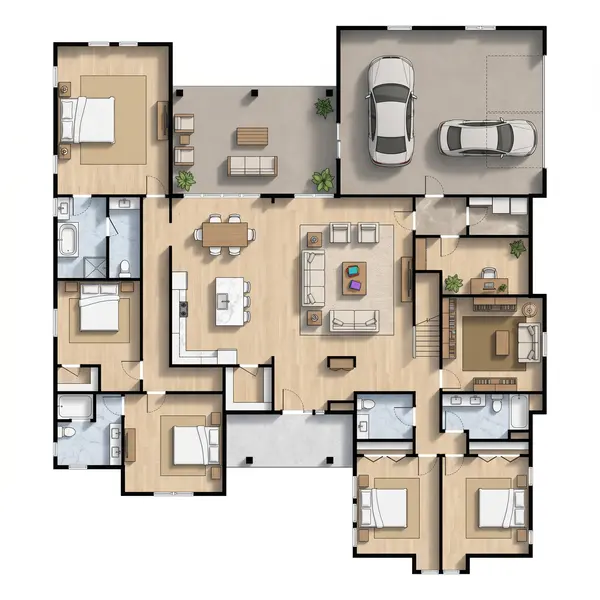 Featured Drafted plan critiqued for layout issues
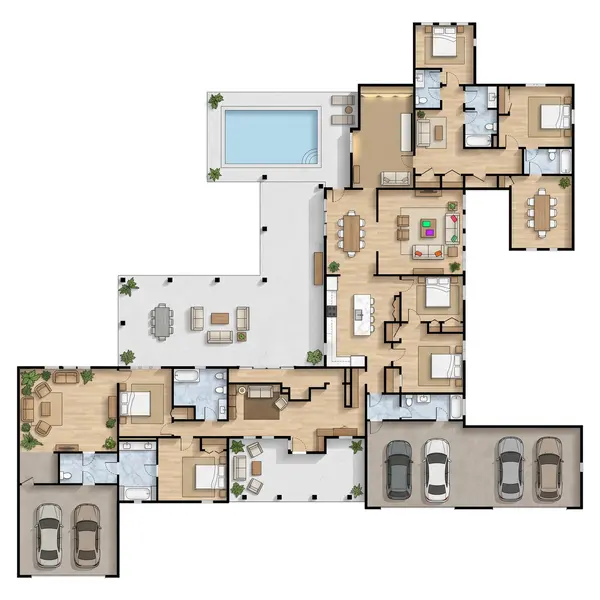 Drafted plan with bathroom and garage oddities