HN Debrief

Why current LLM costs are not sustainable

  • AI
  • Economics
  • Infrastructure
  • Developer Tools
  • Open Source

The post says current LLM economics are shaky because frontier labs are not just billing for inference. They are also trying to recover training, data collection, staffing, and go-to-market costs, while open-weight models let third parties sell much cheaper inference without carrying that full burden. It also argues that local inference will eventually pressure cloud pricing. The strongest reaction was not to the basic claim that prices will fall over time. Most people already assume that. The real fight was over what is distorted today.

Treat current LLM pricing as unstable and design around it now. Use model routing, shorter contexts, and tighter agent loops so your product still works if frontier subscriptions get capped, API prices stay high, or open and local models suddenly get good enough to undercut them.

Discussion mood

Skeptical and pragmatic. People largely expect token prices to fall and open or local models to pressure the frontier labs, but they are unimpressed by vague sustainability claims and much more focused on bad usage patterns, poor agent design, and the lack of real cost transparency from model providers.

Key insights

  1. 01

    Agent loops turn context into the bill

    Long-running coding agents rack up most of their spend from repeated context and cache churn, not from a few visible prompts. Once a tool explores a codebase, revises plans, calls sub-agents, and iterates for hours, the expensive part becomes the constant rereading and regeneration around the task. That makes token costs highly non-linear and hard to predict from the size of the code change alone.

    Instrument your agent workflows before blaming model pricing. Track cache reads, conversation length, and loop counts, then cap or restart sessions when marginal progress drops.

      Attribution:
    • KronisLV #1 #2
    • user43928 #1
    • xienze #1 #2
  2. 02

    Enterprise wrappers can make good models look bad

    A lot of enterprise pain may come from the layer around the model rather than the model itself. One commenter described corporate setups that bolt a frontier model onto a RAG stack and context-management system built for older models, producing cache misses, broken coherence, and worse outcomes than direct use. That reframes some complaints about cost and quality as failures of integration design.

    Audit the harness, not just the model choice. If your enterprise stack is fragmenting context or forcing every turn through brittle retrieval, fix that before upgrading to a pricier model.

      Attribution:
    • PeterStuer #1
  3. 03

    Cheap open models are real but compute-limited

    DeepSeek Flash was cited as already good enough for many practical tasks at a tiny fraction of frontier pricing, especially because cached tokens are so cheap. But that does not mean infinite cheap capacity is available. Even fans noted usage restrictions on stronger DeepSeek tiers because supply is tight. The market pressure is real, but the low-cost providers are still constrained by hardware just like everyone else.

    Plan for open-model price pressure without assuming unlimited availability. If a low-cost provider becomes core to your workflow, have a fallback path for throttling, regional limits, or sudden repricing.

      Attribution:
    • arjunchint #1 #2
    • Aldipower #1
    • szszrk #1
  4. 04

    A back-of-the-envelope floor for self-hosting

    One detailed estimate priced an 8xB200 setup plus power at roughly enough to serve GLM-5.2 output tokens for around $2.86 to $3.32 per million, assuming aggressive utilization and ignoring many softer costs. The precise math is arguable, but the useful point is that a credible local cost floor is coming into view for high-volume users. That gives buyers leverage even if frontier APIs stay better.

    If your org has sustained heavy usage, start modeling a self-hosted break-even now. You do not need to switch immediately, but you want numbers ready before contract renewals with cloud providers.

      Attribution:
    • himata4113 #1
  5. 05

    Cheaper inference unlocks new buyers, not just savings

    The most important demand-side point was that lower prices do not simply shrink vendor revenue. They open AI use to smaller firms that are currently priced out. The next wave is not Fortune 500 companies saving on prompt spend. It is businesses that have never bought meaningful AI at all because today’s costs and uncertainty are still too high.

    Look for products that become viable only when inference is cheap and predictable. The upside may be in new market creation, not in shaving a few points off current enterprise AI budgets.

      Attribution:
    • offby_one #1
  6. 06

    Value is moving from models to routing and distribution

    Several comments landed on the same business conclusion. Frontier models may stay best, but the durable value will sit in the system around them: routing tasks to the cheapest adequate model, verifying outputs, hosting, integration, and distribution. That looks more like cloud or web hosting economics than a winner-take-all software moat. It also makes trillion-dollar valuations for pure model vendors look fragile.

    Build your product so model vendors are replaceable components. The stronger moat is workflow ownership, customer distribution, and cost-aware orchestration across multiple providers.

      Attribution:
    • byzantinegene #1
    • rvz #1
    • jillesvangurp #1

Against the grain

  1. 01

    Inference may already be a decent business

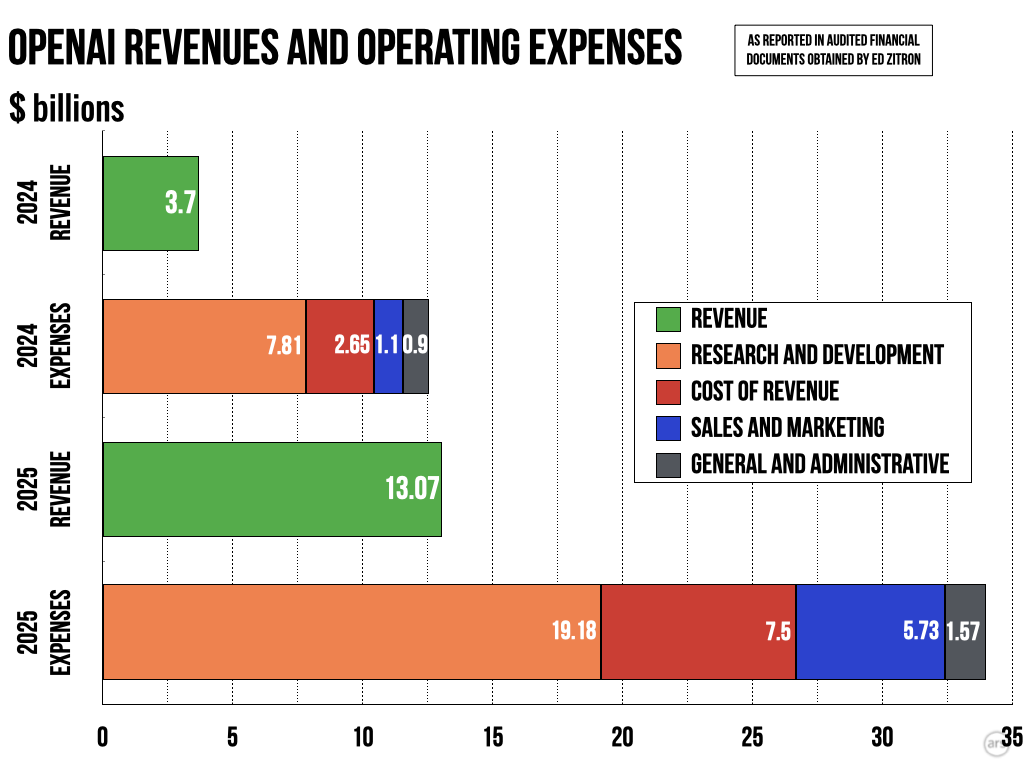
    The strongest pushback was that people keep calling subscriptions subsidized without proving it. Leaked OpenAI figures were cited to show inference revenue can exceed inference cost, and open-model hosts already sell inference at reasonable prices. That does not prove flat-fee plans are profitable, but it undercuts the lazy assumption that every cheap-looking consumer plan must be a money-loser.

    Do not build strategy on slogans about subsidized AI. Ask a narrower question: are you worried about inference margins, total corporate profitability, or the future of a specific plan tier?

  2. 02

    The spend problem is often model misuse

    A recurring minority view was that a $54 TypeScript cleanup says more about operator choices than about market-wide economics. Routine refactors and type fixes should often go to flash-tier or mini models, with frontier models reserved for harder architectural work. From that perspective, the article’s cost alarm is partly self-inflicted by throwing the most expensive model at a task a cheaper one could handle.

    Enforce model selection rules inside your team or product. If simple tasks routinely hit top-tier models, you have a policy failure long before you have an industry pricing problem.

      Attribution:
    • swiftcoder #1
    • exizt88 #1
    • rubin55 #1
  3. 03

    Compare token costs to labor, not intuition

    Some commenters argued the whole debate understates the economic benchmark that actually matters. If an hour of strong model use costs less than an hour of developer time, the spend can still be rational even when the token bill looks shocking in isolation. Failed loops still hurt, but the relevant metric is cost per completed task versus human effort, not whether the raw token number feels absurd.

    Measure AI ROI at the task level. Track whether model usage shortens cycle time or reduces labor enough to justify the bill, instead of optimizing only for lower token totals.

      Attribution:
    • bvcp #1
    • simianwords #1 #2

In plain english

agentic
Describing AI systems that take multiple steps, use tools, and iterate toward a goal rather than just answer one prompt.
API
Application programming interface, a defined way for one piece of software to communicate with another.
cache
Stored results or repeated input segments reused to avoid recomputing the same work, often billed differently from fresh tokens.
context
The text or data a model can see during a session, including prompts, files, prior messages, and retrieved information.
GLM-5.2
A specific large language model family mentioned in the comments as a candidate for self-hosting comparisons.
inference
The process of running a trained AI model to produce outputs from a prompt or other input.
LLM
Large language model, a type of AI system trained on massive text data to generate and analyze language.
open-weight
A model released with its learned parameters available so others can run or host it themselves, even if the original training code or data is not fully open source.
RAG
Retrieval-augmented generation, a way of giving an artificial intelligence model outside documents or facts to use in its answer.

Reference links

Financial and pricing references

Company and partnership context

Prior discussions and examples