HN Debrief

Coreutils for Windows

Microsoft open-sourced a Windows-native bundle of Unix-style command-line utilities under the "coreutils" banner, built from the Rust-based uutils project with Windows-specific fixes. The stated goal is straightforward: let developers moving between Linux, macOS, containers, WSL, and Windows use the same familiar commands and pipelines on bare Windows. That sounds appealing if you want `cat`, `tail`, `cut`, `ln`, and friends without dragging in WSL, Cygwin, or Git Bash.

For Windows to become a serious first-class shell environment for cross-platform developers and AI agents, shipping familiar commands is not enough. Microsoft has to solve command resolution, shell compatibility, and scripting predictability, or this stays a demo rather than infrastructure.

Discussion mood

Interested but skeptical. People like the idea of native Unix-style tools on Windows, but the dominant reaction was that the current package is confusing, incomplete, and not compelling enough versus WSL, Cygwin, MSYS2, Git Bash, or BusyBox.

Key insights

  1. 01 Command selection is more dynamic and brittle than the README first suggests.
    Microsoft says some names dispatch between GNU and DOS variants using heuristics, and in the case of `find` and `sort` that can depend on argument parsing plus registry fallback. That means the exact executable behavior is not just about what is on PATH. It can change based on how a command is invoked, which is the opposite of what people want from scripting primitives.

    A shell tool stops being portable the moment name resolution becomes conditional. Heuristic dispatch is a usability patch, not a stable contract.
      Attribution:
    • lhecker #1 #2
    • Tobu #1
  2. 02 Native Windows binaries and POSIX compatibility layers solve different problems.
    Cygwin and the MSYS2 runtime carry a syscall and filesystem emulation layer so Bash, signals, `fork`, `/dev`, and POSIX path semantics behave as expected. Microsoft's package, like native Mingw-w64 style tools, stays within what Win32 and the NT kernel expose directly. That makes it lighter and more native, but also means it cannot deliver the semantics many Unix scripts quietly rely on.

    Native ports are cleaner to install, but they are not substitutes for a real POSIX environment. The missing abstraction layer is exactly what makes many cross-platform scripts work.
  3. 03 The absence of a shell is the project's biggest unforced error.
    Microsoft says the target is familiar CLI tools for Linux and macOS users, not agents, yet without Bash or another POSIX shell the claim that existing scripts carry over "without translation" does not hold for most shell scripts. The one place the bundle still helps is structured environments like CI YAML or agent tool use, where the caller invokes individual commands rather than full shell programs.

    Shipping `head` and `tail` without a compatible shell helps ad hoc command execution more than script portability. That makes this more useful for automation scaffolding than for transplanting Unix workflows intact.
      Attribution:
    • d3Xt3r #1
    • GoblinSlayer #1
    • thepasch #1
    • lhecker #1
  4. 04 The dropped `shred` command exposed a useful security reality check.
    On NTFS, journaled filesystems, and especially SSDs with wear leveling and TRIM, overwriting a file does not guarantee physical erasure of the underlying data. Windows alternatives like `cipher.exe` can wipe free space, and SSD secure erase commands can wipe whole drives, but there is no clean file-level guarantee. Excluding `shred` is one of the few omissions that looked technically honest rather than arbitrary.

    Some Unix utilities are not missing because Microsoft forgot them. They are missing because the storage stack makes their promise misleading on modern hardware.
      Attribution:
    • neskorodev #1
    • Dwedit #1
    • wtallis #1
    • rzzzt #1

Against the grain

  1. 01 The line-ending war is mostly self-inflicted by bad tooling now.
    Several commenters argued that modern software should trivially accept both LF and CRLF, and pointed to Rust `lines()` and Python `splitlines()` as proof that tolerant parsing is already solved. From that view, treating cross-platform text files as fragile because of newline conventions is just poor engineering.

    If a text-processing tool still breaks on CRLF in 2026, blame the tool before blaming the platform.
      Attribution:
    • forrestthewoods #1 #2
    • maleldil #1
    • CamperBob2 #1
  2. 02 Windows is less structurally hostile to POSIX than the surface UI suggests.
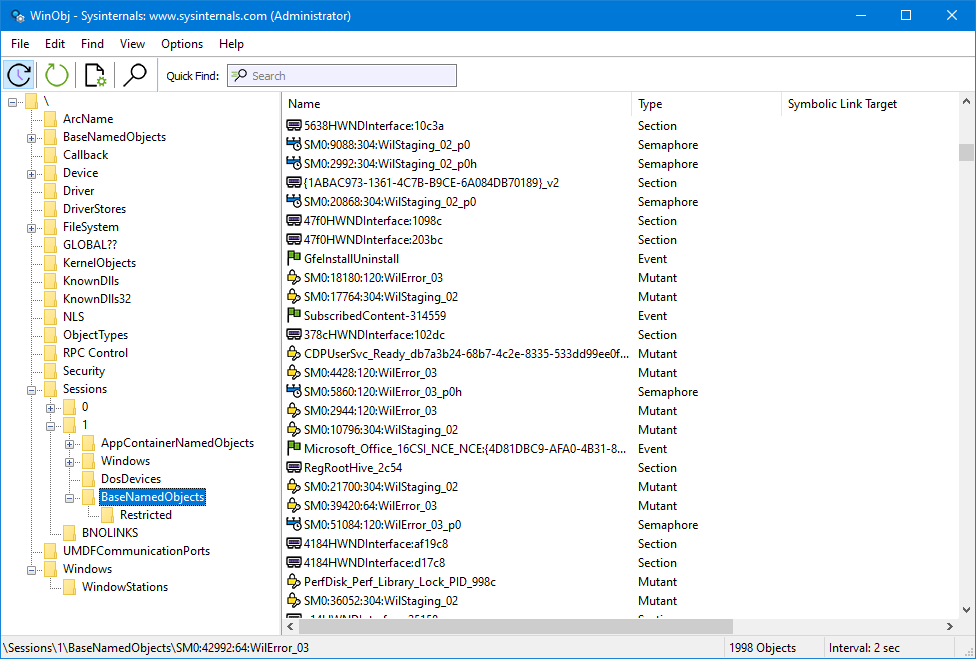
    NT has a real object namespace with a root, device paths, and enough abstraction to support multiple compatibility layers over the years. The common claim that Windows cannot support Unix-like filesystem semantics because of drive letters or lack of a single root confuses user-facing conventions with what the kernel actually provides.

    A lot of Windows weirdness lives in conventions and compatibility layers, not in hard kernel limits.
      Attribution:
    • hnlmorg #1
  3. 03 Cygwin is not an adequate drop-in answer if the goal is native Windows tooling.
    One commenter noted that Cygwin depends on invasive POSIX emulation tricks to reproduce signals and `fork`, while this package keeps commands as ordinary Windows executables. If you care about startup cost, dependency footprint, or integrating with native Windows APIs and paths, that distinction is meaningful.

    "Use Cygwin" misses the point for people who want native executables, not a Unix runtime riding on top of Windows.
      Attribution:
    • penguin_booze #1
    • okanat #1

Reference links

Project and package references

Alternative Unix-like environments on Windows

  • Git for Windows
    Suggested as an existing way to get Bash and Unix-like utilities on Windows.
  • Git for Windows installer
    Direct download link for the Git for Windows environment mentioned as an alternative.
  • MSYS2
    Pointed to as a fuller Unix-like development environment on Windows.
  • BusyBox for Windows by Frippery
    Recommended as a compact Windows-native collection of Unix utilities that avoids many of these conflicts.
  • busybox-w32 repository
    Another Windows BusyBox implementation mentioned as a stable alternative.
  • UnxUtils
    Older standalone Windows ports of Unix tools, cited for people wanting small native binaries.

Historical and technical background

  • Interix
    Historical Microsoft POSIX subsystem referenced as an earlier attempt at native Unix compatibility on Windows.
  • Windows UTF-8 code page guidance
    Cited in a discussion about Windows UTF-16 history and the limited support for UTF-8 in Windows applications.
  • WinObj screenshot
    Used to support the claim that NT exposes a real object namespace with a root under the hood.
  • Windows Subsystem for Linux overview archive
    Referenced in the argument over whether WSL1 implemented `fork` semantics on top of NT.

Storage and secure deletion references

Windows lifecycle and compatibility