HN Debrief

The intracies of modern camera lens repair (2024)

  • Hardware
  • Repair
  • Photography
  • Embedded Systems

The post is a photo-heavy repair diary for a Sigma 45mm mirrorless camera lens. It walks through disassembly, diagnosis, and board-level repair, which is enough to remind anyone who has not looked inside a modern lens lately that these are now compact robots. They pack autofocus motors, flex cables, sensors, microcontrollers, and power electronics into a part many people still imagine as mostly optics. People loved the craftsmanship and the documentation. The useful part was the context they added around why lenses now look like this and why they are awkward to service.

If your product sits at the boundary between hardware and software, assume servicing will be limited unless you design update paths, protection circuits, and documentation on purpose. For buyers and operators, modern lenses should be treated more like embedded systems than passive accessories, which changes maintenance, compatibility, and repair planning.

Discussion mood

Strongly positive about the teardown and the author's repair skill. The mood mixed admiration with practical realism that modern lenses are impressive but much harder to service because they are now software-heavy electromechanical devices with poor manufacturer repair support.

Key insights

  1. 01

    Lens firmware is now compatibility plumbing

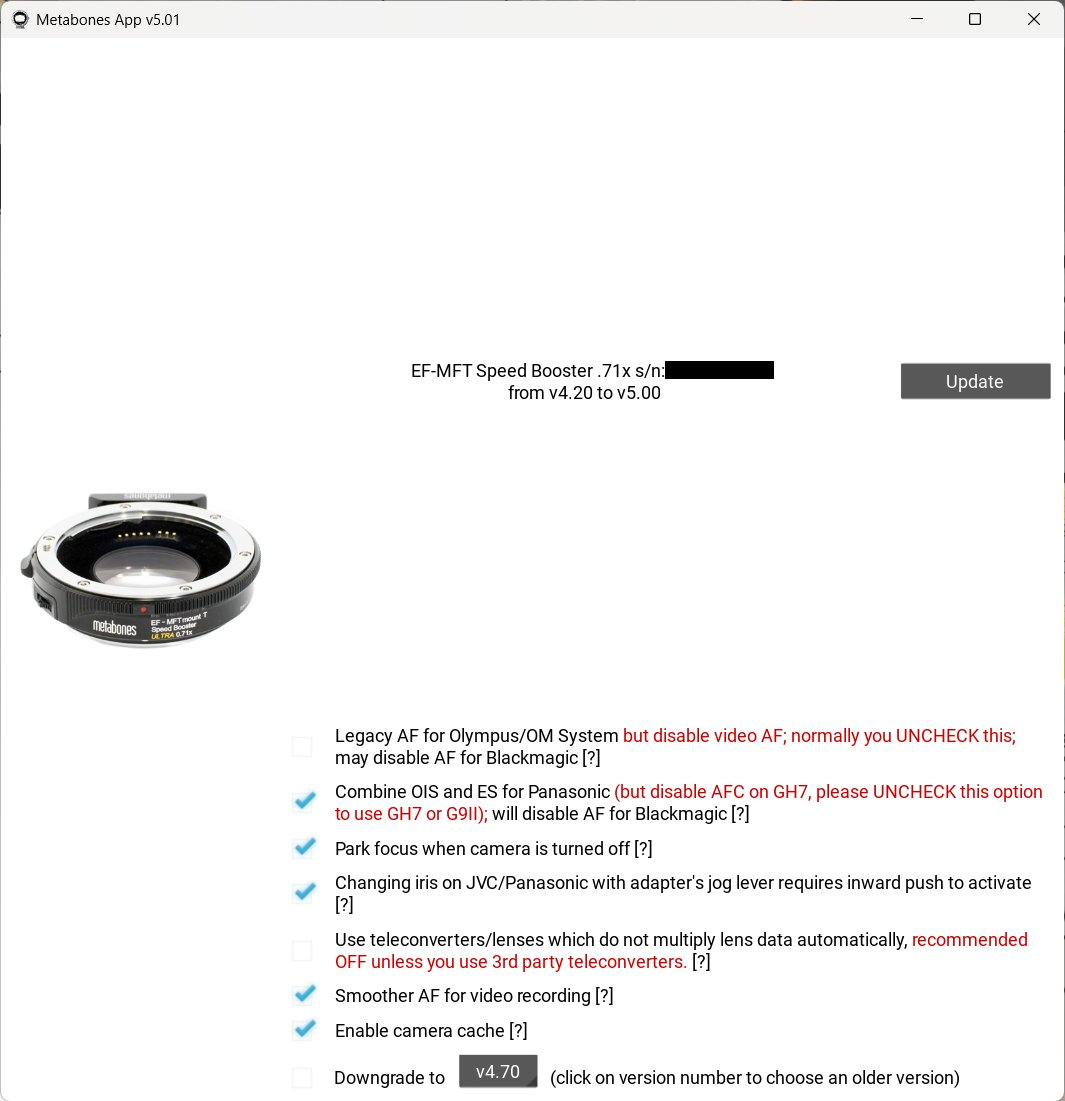
    Firmware in modern lenses is less about shiny new features and more about keeping autofocus, motor behavior, and body compatibility working as camera firmware and new bodies evolve. That is especially true for third-party lenses, which often rely on reverse-engineered mount behavior and need updates to avoid focus hunting, edge-case failures, or long-term wear from bad interactions with newer bodies.

    Treat interchangeable lenses as dependent software components in your gear stack. If you buy third-party glass for production use, budget for firmware management and test new body or firmware combinations before relying on them on a shoot.

      Attribution:
    • jeswin #1
    • BarkMore #1
    • makeitdouble #1
    • formerly_proven #1
    • FireBeyond #1
  2. 02

    Cinema lenses optimize for repeatability, not convenience

    Cine gear stays mechanical because the job is controlled, repeatable focus movement rather than fast automatic acquisition. Focus pullers use marks, monitors, and distance tools to hit the same move every time, and the lens must keep field of view and focus behavior consistent shot after shot. That makes manual systems a feature of the workflow, not a missing modern upgrade.

    Do not evaluate pro video gear with still-photography assumptions. If your product serves expert operators, preserving deterministic control can matter more than adding automation.

      Attribution:
    • salvagedcircuit #1
    • Forgeties79 #1 #2
    • pastel8739 #1
    • PowerElectronix #1
  3. 03

    JIS screws are an easy way to ruin a repair

    Japanese Industrial Standard screws can look close enough to Phillips to fool even careful hobbyists, but the geometry mismatch is enough to cam out and chew up tiny fasteners fast. The practical point is not brand loyalty to a tool vendor. It is that precision teardown work fails on small interface mismatches long before it fails on the hard part.

    For small-device repair, tool standard compatibility is part of the repair itself. If you are designing service procedures or field kits, specify exact driver standards instead of assuming 'Phillips' is good enough.

      Attribution:
    • CarVac #1
    • manoDev #1
    • salvagedcircuit #1
  4. 04

    Fuses do not protect chips by themselves

    The repair notes prompted a useful correction from power electronics people. A fuse is mainly there to stop wiring, batteries, or a whole device from turning into a fire event. Semiconductor protection needs active current limiting, overload handling, or a coordinated clamp-and-fuse design. In dense electronics, a transistor usually dies long before a fuse saves it.

    If you build compact hardware, do not count a fuse as your component protection strategy. Add active protection where silicon can fail faster than the fuse can react.

      Attribution:
    • exmadscientist #1
    • PowerElectronix #1
    • quickthrowman #1
    • blagie #1
  5. 05

    Manual-focus lens design is not dead

    Mirrorless cameras have also created a real market for new high-quality manual-focus lenses, from Voigtländer to Samyang and other cinema-adjacent brands. Easy adaptation and better focusing aids made manual glass useful again, so the modern lens market is not moving in one direction toward more automation. It is splitting into distinct workflows with different values.

    Markets that look 'obsolete' can reopen when a platform change makes old tradeoffs attractive again. Watch for niches revived by compatibility shifts, not just for pure feature escalation.

      Attribution:
    • dofm #1 #2
    • salvagedcircuit #1

Against the grain

  1. 01

    Not every lens problem needs firmware

    A few readers rejected the idea that putting more software into lenses is inevitable progress. Their point was that many functions could stay in the camera body, and that normalizing firmware updates for lenses risks turning a durable optical tool into yet another patchable gadget. That critique sharpens the design question of what intelligence truly belongs at the edge device versus the host.

    When adding software to accessories, justify why it must live there. Extra embedded logic brings support and update burden that users will notice if the benefit is vague.

      Attribution:
    • Kirby64 #1
    • grishka #1
    • kamranjon #1

In plain english

autofocus
A camera or lens system that automatically adjusts focus rather than requiring the user to turn the focus ring manually.
firmware
Low-level software stored on hardware devices that controls how they operate.
focus throw
The amount of rotation needed on a focus ring to move from one focus distance to another.
mirrorless
A type of camera that does not use the mirror mechanism found in DSLR cameras, which changes lens design and electronic communication needs.
USB-C
A reversible connector standard that can carry power, data, and video, but with many capability variations that are not always obvious.

Reference links

Lens firmware and camera system references

Images of accessory lens update tools