HN Debrief

DeepSeek-v4-flash-vision-exp

  • AI
  • Developer Tools
  • Open Source
  • Programming

DeepSeek posted documentation for deepseek-v4-flash-vision-exp, an experimental multimodal version of its low-cost V4 Flash model. The key implementation detail is aggressive image normalization. Every image is resized to roughly 800×800 total pixels before inference, with a cap of 384 image tokens, which makes pricing predictable and cheap but immediately constrains high-detail use cases. That tradeoff shaped almost all of the reaction.

If you already use DeepSeek Flash for coding, vision makes it much more useful for UI QA, screenshot-driven debugging, and multimodal agent loops. But do not assume it can reliably handle full-page OCR, dense schematics, or precise visual reasoning without extra harness work like cropping, tiling, or fallback models.

Discussion mood

Cautiously positive. People were glad DeepSeek finally added vision to a coding model they already liked on price and agent tasks, but confidence was held back by the 800×800 resize cap and reports of brittle performance on OCR, diagrams, landmark recognition, and simple visual reasoning tests.

Key insights

  1. 01

    Crop and tiling can recover detail

    The image cap is less fatal than it looks if you let the model ask for crops of the original image or automatically tile it into high-resolution chunks. That turns a blurry full-frame pass into a two-stage workflow where the model first locates an area, then rereads that region at near-native quality. Several people said this works well for OCR and UI inspection, which reframes the model as a component in a vision harness rather than a standalone end-to-end reader.

    If your agent already has tool use, add a coordinate-based crop or zoom tool before rejecting this model on resolution alone. Benchmark the harnessed version against your current pipeline, because the raw API limit understates what the combined system can do.

      Attribution:
    • wongarsu #1
    • embedding-shape #1
    • johndough #1 #2
    • hedgehog #1
  2. 02

    Vision closes the UI development loop

    What users wanted was not generic image captioning. It was autonomous screenshot inspection during frontend and graphical development. With vision, the model can render a page or app, look at the result, spot spacing and alignment issues, and iterate without waiting for human feedback. That is why this release landed as a real upgrade for coding agents even though its broader visual reasoning is uneven.

    Use vision first where the model can verify its own work against screenshots. That is where you get the biggest productivity gain with the least need for perfect general-purpose perception.

      Attribution:
    • wongarsu #1
    • rpdillon #1
    • dandaka #1
    • deaux #1 #2
    • dcre #1
  3. 03

    Clock tests expose jagged intelligence

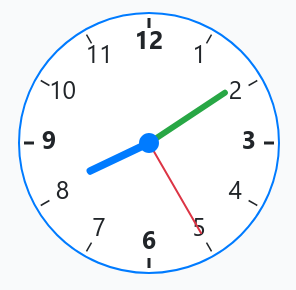
    The analog clock argument landed because it was not really about clocks. It was a compact way to probe whether a model that can handle complex code and OCR-like tasks still fails on ordinary visual composition. People defending the test were making a reliability point. If a vision model confidently misses something this basic, you should expect other non-obvious perception gaps in production too.

    Keep a small suite of simple visual sanity checks next to your task-specific evals. They will not tell you everything, but they will catch brittle failure modes before you trust the model in unattended loops.

      Attribution:
    • skybrian #1
    • altruios #1
    • mejutoco #1
    • ndriscoll #1
    • johnfn #1
  4. 04

    The appeal is cost per coding task

    The benchmark chatter was less about absolute frontier performance and more about economics. Readers saw the release as potentially moving the Pareto frontier for software engineering agents by adding vision to a model that is already cheap enough to use heavily. That matters more than beating the biggest proprietary models on every benchmark, because screenshot-aware coding agents burn through calls fast.

    For agentic development work, price and tool reliability may matter more than top-end benchmark rank. Run costed end-to-end tests, not just quality tests, before choosing a default model.

      Attribution:
    • ttul #1
    • paytonjjones #1
    • bel8 #1
  5. 05

    API choice affects whether screenshot agents work

    One subtle but important clarification was that image-valued tool outputs depend on the API surface, not just the model. If you use interfaces that allow tool results to include images, the model can consume screenshots generated during execution as real visual inputs. That unlocks the screenshot-verification loop many people care about. If you stay on older chat APIs, you can think the model is more limited than it actually is.

    Check your agent stack before blaming the model. A switch from a chat-completions style API to a responses or messages API may be enough to enable visual tool loops you thought were unsupported.

      Attribution:
    • lukax #1
    • RobertLong #1 #2
  6. 06

    Document OCR needs layout preprocessing

    Full-page OCR was one of the clearest places where the 800×800 limit hurts, but commenters pointed to a mature workaround. Instead of sending a whole page, run a lightweight layout detector such as PP-DocLayoutV3 or Unlimited-OCR first, then feed the model text regions or tiles. That turns a weak general page reader into a workable document pipeline.

    Do not use this model as your first-stage document parser. Pair it with a layout or OCR preprocessor and reserve the LLM for interpretation, cleanup, and task-specific reasoning.

      Attribution:
    • johndough #1
    • throwaw12 #1
    • wongarsu #1

Against the grain

  1. 01

    The clock failure may be overstated

    Replications did not agree. One commenter said the model got the same clock image right 9 out of 10 times in fresh sessions, while the original failure came through a different route and may have involved a different harness or reasoning setting. That weakens any broad claim that the model simply cannot read clocks. The more accurate conclusion is that its outputs are unstable enough that a single anecdote is not a reliable capability verdict.

    Treat one-off wins and one-off failures as noise unless you control the harness and rerun the prompt multiple times. If a visual task matters, test across sessions, providers, and reasoning modes before drawing conclusions.

      Attribution:
    • bel8 #1 #2
    • leumon #1
    • efficax #1
  2. 02

    Gotchas miss the intended workload

    Several people pushed back on using analog clocks or sheet music as headline evidence against the model. Their point was not that the failures are fine. It was that this is a cheap experimental coding model, not a flagship computer vision system, and the relevant question is whether it helps on screenshots, PDFs, and software workflows. On those tasks, some users reported it was already useful enough to replace awkward model handoffs.

    Anchor your evals to the work you will actually automate. A model can fail odd visual puzzles and still be the right economic choice for coding and UI-review loops.

      Attribution:
    • dghlsakjg #1 #2
    • johnnyApplePRNG #1

In plain english

OCR
Optical Character Recognition, software that tries to read text from images or pixels.
Pareto frontier
A set of options where none is clearly better on all important dimensions, such as cost, speed, and quality.
PP-DocLayoutV3
A document layout model used to detect and split pages into regions such as paragraphs, tables, or titles before downstream processing.

Reference links

DeepSeek announcement and docs

Vision harness and preprocessing tools

  • Count Anything demo
    Example of a specialized counting model suggested for image counting tasks that general VLMs struggle with
  • Unsloth vision fine-tuning docs
    Suggested resource for fine-tuning a dense vision-language model on annotated diagram data
  • PP-DocLayoutV3
    Document layout model suggested for splitting pages into text regions before sending them to the LLM
  • simple-pp-doclayoutv3
    A stripped-down implementation of PP-DocLayoutV3 offered as a lighter dependency option
  • Unlimited-OCR
    Another document preprocessing and OCR project suggested for handling full-page inputs
  • opencode-vision
    An MCP server example for attaching a separate vision model to a self-hosted DeepSeek setup

Testing and access

Background references